Which AI decision support tools for mental healthcare are actually on the market? A product review
By Anne-Kathrin Kleine in artificial intelligence mental healthcare clinical decision support regulation
December 6, 2024
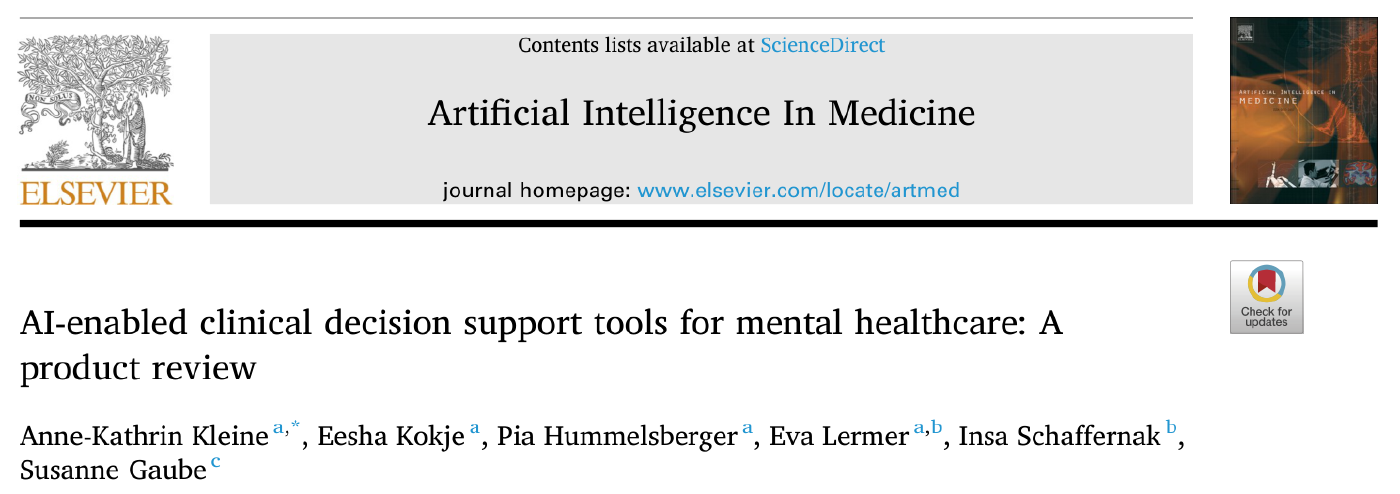
Many AI tools for mental healthcare are developed and patented (see our patent review), but which of them have actually obtained regulatory approval and can be used in clinical practice? Information on regulated AI-enabled clinical decision support systems (AI-CDSS) is scattered across manufacturers’ websites, regulatory databases, and scientific articles. With this review, we wanted to make the market more transparent.
What we did
We systematically searched for regulated AI-CDSS for mental healthcare, contacted vendors for missing information, and reviewed the products’ characteristics, regulatory status, and the scientific evidence on their performance. We assessed the reporting quality of the available studies with the CONSORT-AI checklist.
What we found
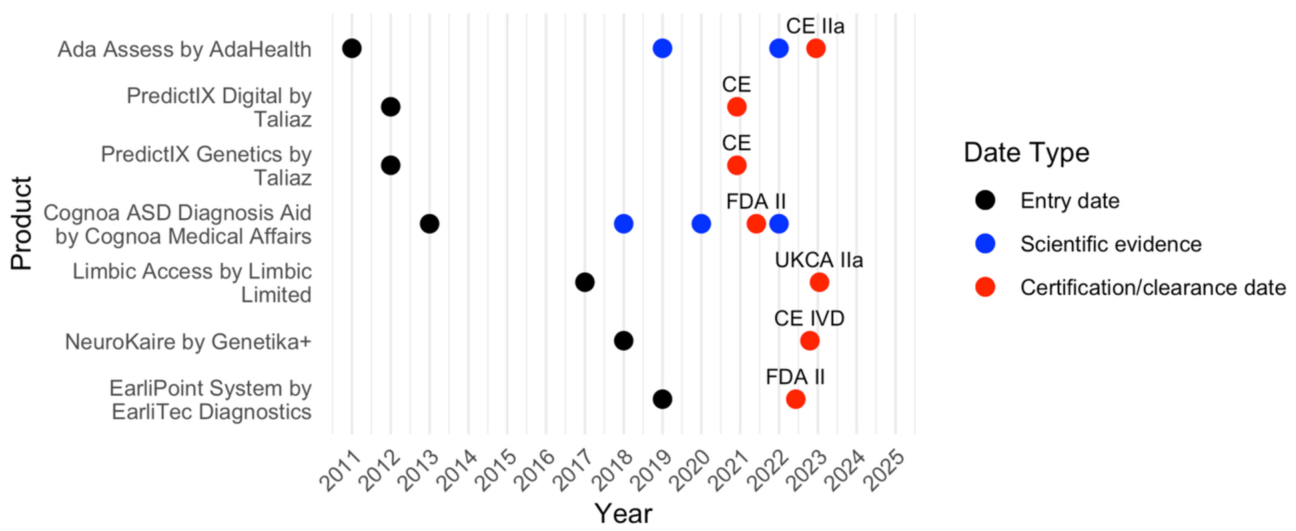
- Of 84 potential products, seven fulfilled the inclusion criteria.
- The products fall into three areas: diagnosing autism spectrum disorder based on clinical history, behavioral, and eye-tracking data; diagnosing multiple disorders based on conversational data; and medication selection based on clinical history and genetic data.
- We found only five scientific articles evaluating the devices’ performance and external validity.
- On average, these articles adhered to 52% of the CONSORT-AI reporting items – modest reporting quality with clear room for improvement.
What this means
Regulatory approval and scientific evaluation do not always go hand in hand. Clinicians, patients, and policymakers need transparent information about which tools are approved and how well they perform. Refining regulatory guidelines and introducing effective tracking systems for AI-CDSS could improve oversight in this fast-moving field.
Read the paper
Kleine, A.-K., Kokje, E., Hummelsberger, P., Lermer, E., Schaffernak, I., & Gaube, S. (2025). AI-enabled clinical decision support tools for mental healthcare: A product review. Artificial Intelligence in Medicine, 160, 103052. https://doi.org/10.1016/j.artmed.2024.103052